How Much Does Senior Daycare Cost in Maryland?

How Much Does Senior Medical  Daycare Cost in Maryland? 

See what families in Dundalk and Greater Baltimore pay to ensure their loved ones receive quality medical and social care and what that rate covers.

See Pricing and Tour a Center

how much does senior daycare cost

how much does adult daycare cost A

The Actual Cost of Senior Daycare in Maryland 

When you’re managing the daily needs of a senior or an adult with medical challenges, budgeting for support can feel overwhelming. 

Nationally, families are told to expect around $95 a day for senior daycare costs. In Maryland, the real number runs higher, closer to $117 a day, and that gap is worth understanding before you budget for anything else. 

However, comparing prices alone doesn’t show you the immense value of professional care. It’s vital to look beyond the daily rate to see the relief, safety, and joy a facility-based medical center brings to your entire family. 

National vs. Local Pricing for Adult Medical Daycare

Nationally, the median senior daycare cost is $95 a day, based on the most recent Cost of Care Survey from CareScout, the industry's benchmark study for long-term care pricing. In Maryland, the median runs higher, at $117 a day.

Daily Monthly Annual
National Median $95 $2,058 $24,700
Maryland Median $117 $2,526 $30,313

Source: CareScout Cost of Care Survey, 2025


Maryland's robust healthcare infrastructure and strict standards for medical licensing mean facilities here employ top-tier registered nurses and clinical directors. 

That higher Maryland number isn't a cause for concern. It reflects regional care and staffing costs, and it still compares well against the alternatives, which we'll get to further down.


Is Senior Daycare More Affordable Than a Nursing Home in Maryland?

Often, yes, by a wide margin.

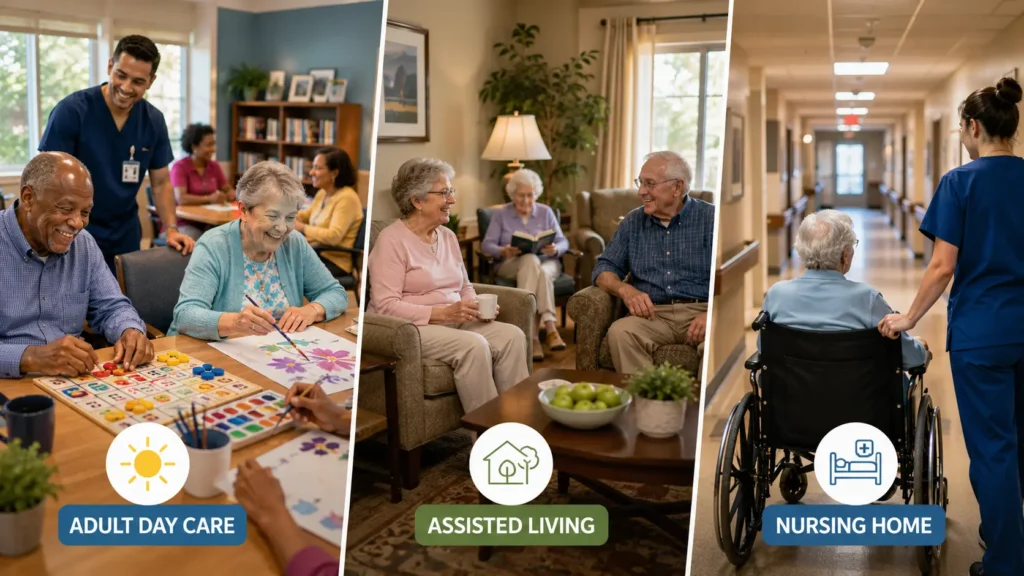
Care Type Annual Median (Maryland)
Adult Day Health Care Based on 5 days per week for 52 weeks $30,313
Assisted Living $86,070
Nursing Home
Based on 365 days of care 
$155,125 (Semi-Private) to $173,375 (Private Room) 
Non-Medical Caregiver
Based on 44 hours per week by 52 weeks 
$80,080
Private Duty Nurse
Based on 1 hour per week by 52 weeks 
$4,420

Source: CareScout Cost of Care Survey, 2025


Senior daycare in Maryland runs at roughly 17% of what a private nursing home room costs each year. For families weighing whether their loved one needs to leave home altogether, that gap is worth sitting with. 

Many participants get the medical support and structure they need during the day, then go home to family and a familiar setting each evening, at a fraction of the cost of full-time residential care.

Aging or living with a physical or cognitive disability shouldn't mean the end of a vibrant social life for you or your loved one. Affording that joy is more accessible than you think.

adult daycare cost A

What Your Daily Rate Covers at Caring Hands AMDC

When evaluating how much senior daycare costs, it is crucial to understand what you’re actually paying for. Some centers charge a base rate and add on fees for transportation or higher levels of care. 

At Caring Hands AMDC, our daily rate is comprehensive and designed to support adults ages 16 and older with medical needs without surprising you with hidden fees. We adjust our care to the individual, but our transparent pricing model is built around a full range of services at our Dundalk and Greater Baltimore centers.

Your loved one's day includes:

Connect With Our Care Team Today


How Families Pay for Adult and Senior Daycare in Maryland

Figuring out the financial logistics is often the biggest hurdle for families, but you don’t have to solve it alone. We understand that finding the right funding is a priority. 

Our team is here to help you assess your eligibility, explore available payment options, and guide you through the next steps, from initial assessments to tour scheduling. 

Medicaid

Maryland's Medical Day Care Services Waiver (MDCSW) helps cover the cost of medical daycare for residents age 16 and older who need a nursing-facility level of care. It's a real path to lowering your out-of-pocket cost, though it isn't automatic. Eligibility depends on income and asset limits that change yearly. You can check current details through the Maryland Department of Health or speak to our team, and we'll walk you through what applies to your situation.

VA benefits

Veterans and their family caregivers can access adult day health care as a recognized VA benefit, either directly or as respite support for a caregiver.

Private pay

If neither of the above fits yet, private pay stays straightforward, and our team can walk you through what a typical week costs before you commit to anything. You also don’t have to commit to a 5-day week; we offer flexible schedules to fit your needs.


Frequently Asked Questions

Does Medicare Cover Senior Daycare?

No. Original Medicare doesn't cover long-term custodial care, and adult day health care is specifically excluded. However, some Medicare Advantage plans offer it as a supplemental benefit, so check your specific plan.

How Are Payments Structured? Is it a Daily, Weekly, or Monthly Fee?

We strive for flexibility. Our billing is typically handled on a schedule that aligns with your funding source (like Medicaid or VA benefits) or your private pay agreement. You only pay for the specific days your loved one is scheduled to attend, which helps you manage your budget without being locked into rigid, full-time contracts. 

Are Medical Equipment, Diapers, and Personal Toiletries Included in the Cost?

Families typically provide personal consumable items like specific adult incontinence products or specialized medical equipment (such as a custom wheelchair or walker). However, our centers are fully equipped with basic hygiene supplies and standard mobility aids to ensure your loved one is safe, clean, and comfortable throughout the day.

We will gladly discuss the logistics of storing these personal items safely at the center during your intake assessment. 

Do You Fill Prescriptions at the Daycare Center?

No, we’re not a pharmacy. Families provide the necessary prescribed medications, and our licensed on-site nursing staff securely stores, manages, and administers them exactly on schedule while your loved one enjoys their day with us. 

What Happens if My Loved One Has a Doctor's Appointment During Their Visit?

We want to make your routine as stress-free as possible. If your loved one is attending our center and needs to go to a scheduled medical appointment, our transportation team can safely escort them there and back. This means you don’t have to leave work in the middle of the day. 

How is Emergency Medical Care Handled During the Day?

Because we are a medical daycare, we have registered nurses on-site at all times. If a medical emergency arises or your loved one's condition suddenly shifts, our trained clinical staff acts immediately. We continuously monitor vital signs and will coordinate directly with you and your primary physician to ensure the highest level of safety. 


See What Your Daily Rate Covers

Come see the center, meet the team, and get a straight answer on pricing, payment options, and what a typical day looks like. From assessments and tour scheduling to connection and care, our family is here to help yours.
Get Clear Answers


Adult Daycare Requirements: What Families Need to Know

Adult Daycare Requirements in Maryland: A Family's Pre-Enrolment Guide

Adult daycare requirements break down into two simple pieces: what the state or Medicaid needs, and what the center itself needs. In Maryland, Medicaid coverage depends on age, medical need, and a nursing facility level of care. The center's side is mostly paperwork and a short assessment. 


When you are balancing work, family obligations, and caring for a loved one, finding the right support shouldn't require a law degree. If you're searching for adult daycare requirements, you simply want to know: 


The good news: it's more straightforward than it looks once you separate the two pieces involved. Once you have a general understanding of how adult medical daycare works, knowing these specific program requirements helps clarify the remaining details. 


What "Adult Daycare Requirements" Really Means

There isn't one single requirement. There are three separate pieces, and most families only need to consider one or two of them.


  1. Age and functional need. Adult medical daycare programs like ours serve adults 16 and older who need supervision, medical support, or help with daily activities during the day. 
  2. How it gets paid. This usually means Medicaid through a specific waiver, VA benefits, or private pay. Each path has its own rules, and Medicaid's are the most detailed. 
  3. The center's own intake. Every facility has its own paperwork and assessment process, separate from anything Medicaid requires.


Most of the stress families feel comes from not knowing which of these three applies to them. Once you know that, the rest is merely gathering documents.


The Maryland Medicaid Rules, in Plain Language

If Medicaid is part of the plan, Maryland's Medical Daycare Services Waiver is the program that usually applies. So, what determines eligibility? 


Eligibility type What it requires
Medical Needs a nursing facility level of care
Technical Age 16 or older, has a medical order for medical daycare, isn't enrolled in another waiver at the same time, and community-based care can't cost more than institutional care
Financial Must already have full Medicaid coverage


This specific federal and state medical waiver program serves adults 65 and older, plus adults 16 to 64 with physical or other disabilities who meet that nursing facility level of care. 


Once approved, the waiver covers these medical adult daycare requirements for at least four hours a day, up to seven days a week. It also includes activities, meals, medication monitoring, nutrition, skilled nursing, social work support, therapy, and transportation.


To get the process started, a family calls their local health department or Maryland Access Point at 844-627-5465 to request the medical assessment that determines level of care.


Importantly, Medicaid and Medicare aren't the same program. 


Medicare typically doesn't cover adult daycare the way Medicaid can. If you're weighing your options, understanding that difference is helpful when navigating the financial requirements for adult daycare.


What Our Care Team Wants to Know

Separately from the state's Medicaid rules, our team needs a few things before your loved one can start. We need a


Our nursing and social work team will also do a short assessment to build a care plan around your loved one's specific needs.

Understanding exactly how to qualify for respite care means you have the necessary medical documentation ready before your loved one's first day. 


Transportation and Schedule

For many families, the logistics matter as much as the eligibility rules. We offer door-to-door transportation for enrolled clients. This solves a real problem if driving your loved one there and back every day isn't realistic with your schedule.

Scheduling is flexible too. Some families start with one or two days a week and build from there. Others need full-time coverage while they go to work. Either way, you're not locked into a single rigid plan from day one.


Questions to Ask Before You Enroll

Before you call, it helps to walk in with a short list. Here's what we'd suggest asking any center, including us.


None of these questions are wrong to ask, and a center that hesitates to answer any of them is telling you something too.


How to Prepare for a Visit or Assessment

A first visit goes more smoothly with a little preparation. 


Some families find it helpful to bring their loved one along, if possible, so the visit doubles as their own first look at the space.


For Case Managers and Social Workers

If you're a professional referring a client rather than a family member enrolling a parent, the process runs the same way: medical eligibility, technical eligibility, and our intake. 


We work with social workers and case managers regularly and can walk through a specific case together. 

Submit Your Referral


Let's Review Your Situation Together

Every family's situation looks a little different, which is why a conversation beats trying to figure everything out alone. At Caring Hands Adult Medical Daycare, we'll tell you honestly whether Medicaid, VA benefits, or private pay fits best and what happens next.


Let’s Talk About Your Options


Common Questions About Adult Daycare Requirements

What Are the Requirements for Attending Medical Adult Daycare?

In short: age 16 or older, a need for daytime supervision or support, and a way to pay for it, whether that's Medicaid, VA benefits, or private pay. Each center also has its own paperwork and a short intake assessment.


Do I Need a Doctor's Referral First?

You'll need a medical order or clearance form from a doctor at some point in the process, yes. It doesn't have to come before your first phone call or visit, though. Most families start by reaching out, then handle the paperwork once they've decided it's the right fit.


Does Medicaid Require an Assessment, and Who Arranges That?

Yes. Maryland requires a medical assessment to confirm your loved one meets a nursing facility level of care before Medicaid's Medical Daycare Services Waiver applies. Your local health department or Maryland Access Point can get that scheduled.


Can Someone Who Uses a Wheelchair or Walker Attend?

Yes. Our facilities and transportation are built to accommodate mobility needs, and staff are trained to assist safely with transfers, seating, and moving around the building.


Can the Caring Hands AMDC Staff Help With Feeding and Personal Hygiene Assistance? 

Yes, absolutely. We understand that needing help with daily tasks can sometimes feel vulnerable, which is why our trained staff approaches all personal care (grooming, hygiene, and restroom assistance) with the utmost patience and respect for your loved one's dignity. 

We also provide dedicated, one-on-one feeding assistance for participants who can’t eat independently. If your loved one requires support with a specific feeding device, our on-site registered nurses will safely manage their nutritional needs. 


What if We're Not Ready to Enroll and Just Have Questions?

That's a perfectly reasonable starting point. You don't need to have made any decisions to call or visit. If figuring out the cost of adult daycare is currently weighing on your mind, exploring your financial options early can help you plan with confidence. 


Ready to See What Fits Your Family?

You don't need every answer figured out before you reach out. Bring your questions, your uncertainty, and wherever you are in the process. We'll help you sort out what applies to your situation.


Schedule Your Tour Today

The hardest part is asking. We'll handle the rest.


Disclaimer: At Caring Hands Adult Medical Daycare, we love sharing resources, tips, and more to help our community thrive. However, please keep in mind that the information on our blog is for educational and inspirational purposes only. While we are experts in care, the content here is not a substitute for professional medical advice, diagnosis, or treatment.

We always recommend speaking with your primary physician or a qualified healthcare provider regarding any specific medical concerns or changes to your loved one’s care plan.

Adult Daycare vs. Nursing Home: Choosing the Right Support

Many families begin comparing adult daycare, nursing homes, and assisted living options when caregiving at home becomes overwhelming. Adult daycare provides professional medical support and social engagement while participants live at home. In contrast, assisted living and nursing homes involve moving into a residential facility. The right choice depends on your loved one’s medical needs, safety concerns, and your family's financial and emotional goals.

Caring for an adult loved one is a journey that often starts with small gestures.

You may begin by helping with errands, but responsibilities slowly grow. Medications become more complex. Safety concerns rise. Eventually, many caregivers ask whether they can safely continue managing everything at home.


When this happens, families often start looking into adult daycare, assisted living, and nursing homes. However, these options serve very different needs. Understanding these differences helps you find the right support for your family at the right time. It prevents you from making a bigger transition before it’s necessary.


Adult daycare vs. Nursing Home: The Biggest Difference

The most important distinction between adult daycare and nursing home care is where your loved one lives.

A nursing home replaces the home environment. It offers 24-hour residential care for people who can't live on their own anymore because of their medical care or supervision needs.

Adult daycare supports the home environment. It’s designed for adults who safely live at home but benefit from structure, health monitoring, and social engagement during the day.

In other words, one option replaces the home environment; the other supports it.

Cost is another important factor to consider. Although costs vary, adult daycare is usually cheaper than residential care because the participants go home every night.

What Life Looks Like in an Adult Daycare Program

A good adult daycare program helps participants stay active, in touch, and cared for all day. Members come in the morning and spend the day in a structured setting with meals, activities, social events, and support services.

At Caring Hands Adult Medical Daycare, participants may spend time enjoying therapeutic programs, connecting with friends, participating in creative activities, sharing meals, or receiving support from our nursing team and personal care staff. Some spend time exercising. Others enjoy games, discussions, music, movies, arts and crafts, or relaxing in our library by the fireplace.

Our goal is helping participants remain active and stimulated while continuing to enjoy life at home with their families.

Senior Center vs. Adult Daycare: Different Support Levels

Families often compare these support systems because both offer social interaction. However, senior centers are for independent adults seeking recreation.

Adult daycare provides additional supervision, medication support, personal care, and medical monitoring. The right choice depends on whether your loved one needs recreation or professional care.

Adult Daycare vs. Assisted Living: Understanding the Living Arrangement

The comparison between adult daycare and assisted living often hinges on one question: Does your loved one need support during the day, or do they need a different place to live?

Assisted living communities provide housing along with support for daily tasks such as meals, housekeeping, medication reminders, and personal care. For many older adults, assisted living offers a welcome balance between independence and support.

However, moving into assisted living means leaving home and becoming part of a residential community.

Adult day care takes a different approach. Instead of changing where someone lives, it strengthens the support they receive while remaining in familiar surroundings.

For many senior adults, that distinction matters. Familiar routines, favorite belongings, family dinners, and sleeping in their own bed can all contribute to comfort and quality of life.

What Nursing Homes Provide

Nursing homes provide the highest level of continuous medical care outside a hospital. They are appropriate for people who require 24-hour nursing intervention or have safety concerns that can’t be managed at home or in assisted living arrangements.

Selecting a nursing home is often the safest and most compassionate decision for families managing complex medical situations.

Asking for support doesn't mean you've failed. It means you love someone whose needs have grown, and you're wise enough to build the care team they deserve.

Which Situation Sounds Most Like Yours?

Determining whether your loved one needs adult daycare, assisted living, or nursing home care depends on your specific situation. While every family's situation is different, these examples can help clarify which option may be worth exploring.

"Mom Is Mostly Independent, but I'm Worried When She's Alone"

If your loved one is generally managing well but needs supervision, social engagement, medication support, or a structured daily routine, adult daycare may provide the right balance of independence and support.

If your loved one needs a balance between independence, support, and supervision, assisted living can also be a solution. However, looking into the depth of care needed vs. provided in the community.

"Dad Doesn't Need a Nursing Home, but Caregiving Is Becoming Too Much"

Many caregivers reach a point where they’re physically and emotionally exhausted.

In situations like these, adult daycare can provide reliable daytime support while families continue to care for their loved one at home.

You might also consider respite care. This service gives caregivers a short-term break. A support caregiver generally either comes to your home, or your loved one is booked into an overnight center for a while. However, adult daycare is a more long-term solution.

"Medical Needs Have Become Too Complex"

If your loved one requires 24-hour skilled care or constant nursing intervention, a nursing home may be the safest and most appropriate option.

The Caregiver Benefit

Caregivers often expect their loved one to benefit the most from a program, but they’re surprised by their own relief. Knowing your loved one is safe and engaged lets you focus on work, family, or catching your breath.

Familial caregiving is a humongous and continuous undertaking. Few people fully understand the responsibility you commit to or the complete exhaustion you can feel. Needing support or a break isn’t about your skills or love but about sustainability.

Adult daycare doesn't eliminate your responsibilities; it helps distribute them. For many caregivers, that support helps transform caregiving from something that feels overwhelming into feeling manageable again.

H2: Let's Explore Your Options Together

If you’re trying to figure out if adult medical daycare is the right next step, the best way to know is to experience it in person.

We have two facilities in the Baltimore area. Just contact us to set up a meeting. You can meet our team and see how we help participants stay active and connected while living at home.

Whether you have questions about services, costs, or scheduling, we’re here to help you make an informed decision.

Schedule Your Tour Today

Your Adult Daycare, Assisted Living, and Nursing Homes Questions Answered

What's the Main Difference Between Adult Daycare and Nursing Home Care?

Adult daycare is a community-based program where participants receive medical and social support during the day before returning home. A nursing home is a residential facility providing 24-hour skilled nursing care.


How Much Does Adult Daycare Cost Compared to Other Options?

Adult daycare typically costs less per day than residential options like nursing homes or assisted living. During a tour, we can discuss your specific situation and help you understand the support options available.


Can Adult Daycare Delay the Need for a Nursing Home?

For many families, yes. Professional health monitoring, social engagement, and caregiver respite can make living at home sustainable for a longer period.


Is Adult daycare the Same as Respite Care?

Not exactly. Adult daycare can provide respite for caregivers, but it also offers structured activities, health support, social engagement, and routine on an ongoing basis. Respite care is short, limited support for unpaid caregivers.


How Do I Know If My Loved One Needs a Nursing Home?

Factors such as medical complexity, safety concerns, mobility limitations, and supervision needs all play a role. Discussing these concerns with healthcare providers can help families evaluate the most appropriate level of care.


Is Caring Hands Adult Medical Daycare the Right Next Step for Us?

Every family's situation is unique, and there is no single answer that fits everyone. The best way to know if we’re the best solution for you is to make an appointment with us.


Speak to Our Team Today


Disclaimer: At Caring Hands Adult Medical Daycare, we love sharing resources, tips, and more to help our community thrive. However, please keep in mind that the information on our blog is for educational and inspirational purposes only. While we are experts in care, the content here is not a substitute for professional medical advice, diagnosis, or treatment.


We always recommend speaking with your primary physician or a qualified healthcare provider regarding any specific medical concerns or changes to your loved one’s care plan.


What Types of People Attend Adult Day Care? Understanding the Participants

When families first explore care options, they often carry a mental picture that doesn't match reality.

Maybe we imagine a room where people sit quietly, or we assume the service exists only for those who can no longer function at all. These assumptions make it hard to understand what types of people attend adult day care in a modern setting.

The truth is that our community is a vibrant mix of individuals, each with a unique story.

When looking at what types of people attend adult day care, you will find a shared desire to live with dignity and remain connected to the Baltimore community.

Seniors Looking for Connection and Social Joy

One of the most common answers to the question of who attends adult day care is older adults who are medically stable but deeply isolated.

Social isolation among seniors is a quiet epidemic. Research shows that loneliness carries significant health risks. Participants in this category don't always need intensive medical help. They need a reason to get dressed in the morning.

At Caring Hands Adult Medical Daycare, we see people who were once lonely transform into the heart of our card game groups. This engagement does more than pass the time; it protects cognitive health and restores a sense of daily meaning.

Adults Managing Chronic Health Conditions

When researching what types of people attend adult day care, many families are surprised to find a strong clinical component.

Many people join our family because they are managing ongoing medical conditions that require close monitoring. Common conditions we support include:

Our registered nurses coordinate with doctors to manage medications. This professional layer of protection is a major reason why these specific types of people attend adult day care rather than staying home alone.

Individuals with Cognitive Changes and Memory Needs

A significant portion of our community lives with Alzheimer’s or other forms of dementia. For these loved ones, a predictable routine is a source of immense comfort.

We focus on what our participants can do. Whether it’s through music therapy or memory-stimulating games, we prioritize dignity-first care.

If you are wondering what types of people attend adult day care, many are individuals in the early to mid-stages of memory loss who benefit from structured enrichment. This prevents the safety risks that can happen when someone with memory loss is left unsupervised.

Younger Adults Living with Disabilities

We often hear the question: is this just a senior center? Not at all.

A key part of understanding what types of people attend adult day care is recognizing the younger population. We’re proud to be inclusive of adults in their 30s, 40s, or 50s who live with physical or developmental disabilities.

These participants often seek peer connection and a way to maintain their independence outside of the home.

By focusing on social joy rather than just "supervision," we help younger adults build a vibrant, life-affirming social life.

Recovering After a Hospital Stay or Surgery

Sometimes, attendance is temporary. After a surgery or a hospital stay, a loved one might be "discharged" but not quite ready to be home alone.

When we look at what types of people attend adult day care, we often see those in a transitional phase of healing.

We act as a safety net offering nutritional support and a safe environment while they regain their strength. This bridge between hospital and home guarantees that healing happens in a social environment rather than in isolation.

Frequently Asked Questions About the Types of People Attend Adult Day Care

Is Adult Day Care Only for People Who Are "Confused" or Have Dementia?

No. While we provide specialized memory care, many of our members are cognitively sharp but have physical disabilities or chronic illnesses like diabetes that require nursing oversight during the day.

What Is the Difference Between a Senior Center and an Adult Medical Daycare?

A senior center is typically social and recreational. A medical daycare like ours is a social-medical hybrid.

We provide the same fun and friendship while also offering professional nursing and help with Activities of Daily Living (ADLs).

Do You Provide Transportation for Participants?

Yes, we understand that getting to and from our center can be a challenge for busy families. We offer transportation services to ensure your loved one arrives safely and returns home in time for dinner.

Is the Environment Clinical Like a Doctor's Office?

We like to think of our centers as a "home away from home." While we have medical professionals on staff, the environment features homey details like a library fireplace, a beauty salon, and a theater to ensure everyone feels comfortable and dignified.

Can My Loved One Attend Just a Few Days a Week?

We work with families to find a schedule that fits their needs. Whether it is full-time support so a caregiver can work, or a few days a week for social enrichment, our goal is to support the family unit.

How Does Adult Day Care Help if My Loved One Is Recovering From a Recent Hospital Stay?

Our registered nurses monitor vital signs and manage medications, while our structured environment prevents the depression and physical weakness that often set in when someone is recovering in isolation. It’s about ensuring the recovery sticks.

Are There Activities Specifically for Younger Adults With Disabilities?

Absolutely. Whether it’s through our media theater or specific social clubs, we make sure younger adults find a peer group and activities that energize them rather than leave them feeling out of place.

What Happens if My Loved One’s Medical Needs Change Over Time?

Because we’re a medical model, we are equipped to evolve with you. Our clinical team maintains open communication with your primary physicians.

If a participant requires more assistance with daily tasks or more frequent nursing oversight, we adjust their care plan right here in our "home away from home" to ensure they remain safe and supported.

Finding the Right Support for Your Family

Deciding what types of people attend adult day care often comes down to one question: Will my loved one be safe and happy here?

At Caring Hands Adult Medical Daycare, we have been serving the Dundalk and Greater Baltimore areas for over 20 years. We aren't just a facility; we are a family-first community. We offer a "home away from home" where participants find purpose and caregivers find peace of mind.

Your loved one deserves a day filled with purpose. We invite you to visit us, see our fireplace, and meet the neighbors who make our center so vibrant.

Schedule a tour of our Dundalk center to see in person the types of people who attend adult day care today.

Disclaimer: At Caring Hands Adult Medical Daycare, we love sharing resources, tips, and more to help our community thrive. However, please keep in mind that the information on our blog is for educational and inspirational purposes only. While we are experts in care, the content here is not a substitute for professional medical advice, diagnosis, or treatment. We always recommend speaking with your primary physician or a qualified healthcare provider regarding any specific medical concerns or changes to your loved one’s care plan.

What Is a Social Adult Day Care? A Comprehensive Guide for Families

Your dad used to love chatting with neighbors, telling stories, laughing at old memories. But lately, the days feel longer, and the silence in the house has grown heavy. You want him to stay active and connected, but you also need to know he’s safe and cared for while you’re at work. 

That’s where social adult day care programs like the one at Caring Hands Adult Medical Day Care can help. These community-based centers give seniors a place to belong whether it’s to share meals, enjoy activities, and find friendship again. 

In this guide, we’ll talk about how these programs work and how they bring comfort, purpose, and peace of mind to families like yours.

What Is a Social Adult Day Care?

A social adult day care is a daytime program designed for seniors who can live at home but may need help with daily activities or companionship during the day. 

These centers focus on social connection, emotional support, and personal care rather than medical treatment.

Think of it as somewhere your loved one can spend time with others, share meals, and enjoy activities that keep both the mind and spirit engaged. 

Staff members provide gentle supervision, organize programs, and make sure everyone feels included and valued.

For many families, social adult day care bridges the gap between total independence and full-time care. It allows seniors to remain at home while still benefiting from daily structure, friendship, and routine.

Key Services Offered in Social Adult Day Care

Social adult day care centers offer more than just a place to pass the time. They’re designed to support the whole person emotionally, socially, and physically.

Here are some common services and activities you’ll find:

Who Can Benefit from Social Adult Day Care?

Social adult day care is ideal for:

Social Adult Day Care vs. Medical Adult Day Care

While both types of programs offer daytime support, there’s a key difference between them:

Care and Connection for Your Loved One in Baltimore and Dundalk, MD

At Caring Hands Adult Medical Day Care, we believe every day should bring a sense of joy, purpose, and belonging. 

From arts and crafts to music, singing, and dancing, our social programs bring energy and happiness to each day. 

Our on-site movie theatre gives participants a chance to relax and enjoy familiar favorites, while group games, puzzles, and trivia help keep minds active and sharp. 

Alongside our social programs, we provide high-quality medical support through our nursing services, which include:

As a trusted medical and social adult day care program, we give seniors a place to belong. 

Contact us today to learn more.

How Much Does Adult Day Care Cost? A Practical Guide to Prices, Benefits, and Alternatives

For many families, adult day care is more than a service; it’s a lifeline. It offers seniors safety, companionship, and meaningful activities, while allowing caregivers to catch their breath. 

But when you begin to wonder how much senior day care costs, the numbers can feel overwhelming and unclear. That’s why this guide breaks it down in simple terms, so you know what to expect, what you’re paying for, and how to make choices that support your loved one’s care and your family’s peace of mind.

What Is Adult Day Care and What Services Are Included?

Adult day care is designed for older adults who need help during the day but don’t require round-the-clock nursing home care. It’s a supportive option for families who want their loved ones to stay engaged and safe in a social setting while still living at home.

The services often include:

How Much Does Adult Day Care Cost on Average?

The average daily rate across the United States is $80 to $120. If your loved one attends full-time, that amounts to about $1,600 to $2,400 a month.

Costs can look very different depending on where you live. For example:

What Affects the Cost of Adult Day Care?

There are several factors that shape the final cost:

Level of Care Needed

If your loved one needs only light supervision and companionship, the cost will likely be lower. However, if they require help with feeding, mobility, or memory care, the daily price can increase.

Program Offerings

Centers that provide extras like specialized therapies, outings, or on-site medical staff may charge more. While these services add to the price, they can also improve the quality of life for seniors.

Frequency of Attendance

Some families use adult day care only a few days a week, which lowers the monthly total. Others choose full-time attendance so that caregivers can maintain steady work schedules. Many centers are flexible and allow you to create a plan that fits your needs.

Transportation

Door-to-door transportation can be a huge help, especially if you can’t drive your loved one daily. Some programs include it in the price, while others charge a small extra fee.

Compassionate Adult Day Care Made Accessible Through Multiple Payment Options

At Caring Hands Adult Medical Day Care in Dundalk and Greater Baltimore, we aim to give families peace of mind while providing seniors and adults with disabilities the care, dignity, and joy they deserve. 

If cost is a concern, know that we accept Medicaid, VA benefits, and private pay, and our caring team is here to guide you through eligibility and payment options step by step.

From dementia-friendly activities like memory games and group discussions to nutritious meals, personal grooming support, and medical care for conditions such as diabetes, we focus on helping each person feel safe, supported, and engaged. Add entertainment, social connection, and a warm, welcoming environment, and you’ll see why so many families trust us with their loved ones.

Contact us today to learn more about our programs and how we can support your family.